Cartujano Bank
La piel del tamborCartujano Bank is the powerful Andalusian institution at the center of Pencho Gavira’s financial and political maneuvering. Its proposed redevelopment of Nuestra Señora de las Lágrimas is not merely a property deal: Gavira treats it as part of a chain of transactions meant to attract Saudi investment, shore up the bank’s accounts, and secure his succession to the presidency. The same chain exposes the institution to concealed losses, governance failures, and public scandal. Its conquest of Banco de Poniente supplies a trophy of victory; the confidential investigation Gavira keeps hidden shows how precarious that victory is.
The bank and its expansion
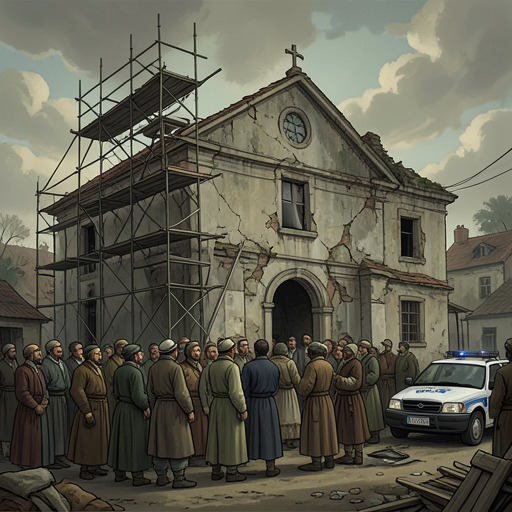
Cartujano is presented as the foremost bank in Andalusia, with sufficient reach to pursue large property schemes and absorb a regional competitor. Gavira and Octavio Machuca discuss a redevelopment opportunity in Santa Cruz involving 3,000 square meters, linked to the proposed purchase of Puerto Targa by Saudi interests. Gavira estimates the connected transaction at between $180 million and $200 million. He presses to limit the cost of securing the necessary cooperation, while Machuca notes that the archbishop’s willingness to secularize the land, remove the parish priest, and demolish the church requires careful compensation. The exchange makes clear that Cartujano’s commercial ambitions depend on decisions affecting both ecclesiastical property and the city’s built environment.
The bank’s expansion has also been accomplished through the absorption of Banco de Poniente, the only Andalusian institution that had seriously rivaled Cartujano. A Klaus Paten painting, taken by Gavira after the acquisition, hangs in his office as a captured standard. Its dimensions—2.20 by 1.80 meters—and its former role above Poniente’s board meetings make it a material emblem of the takeover. The conquered bank’s board is scattered and powerless, its president reduced to choosing between suicide and an honorary place on Cartujano’s board. What appears in Gavira’s office as a triumph is also a reminder of the human and institutional wreckage behind Cartujano’s growth.
The church project and Puerto Targa
The redevelopment of Nuestra Señora de las Lágrimas is tied to Cartujano’s plan to sell Puerto Targa to Sun Qafer Alley, a Saudi-backed group. Gavira presents the church-site transaction as a way to make the Santa Cruz district an elite tourism destination and to make Puerto Targa more attractive to its intended purchaser. The broader scheme includes a small luxury hotel near Seville’s former mosque, a personal project of Kemal Ibn Saud, the Saudi king’s brother and Sun Qafer Alley’s principal shareholder. Gavira regards the church development as essential to completing the larger deal and buying the bank time.
The apparent promise of a sale conceals a complicated financial structure. Puerto Targa was created to develop a golf course, luxury villas, and a marina in a protected area near Doñana National Park. Its original share capital of five million pesetas rose to nine billion after an expansion. Cartujano acquired 78 percent of the company at Gavira’s instigation; private holders retained the remaining 22 percent, including a substantial package held by H.P. Sunrise, a company based in the French Antilles that investigators suspected might be connected to Gavira. The proposed buyer, Sun Qafer Alley, had not yet completed the purchase, although the sale was repeatedly described as imminent and expected to generate a substantial premium.
The confidential investigation reconstructs the central deception: Puerto Targa was financed almost entirely by Cartujano through a complex structure involving companies based in Gibraltar, a fact concealed from most of the bank’s board. In the earlier accounts, the bank had recorded 7.02 billion pesetas associated with its purchase of the company as income, although the money had effectively been paid to itself through the shell-company arrangement. The anticipated resale was then supposed to produce a further gain and repair a hole in Cartujano’s balance sheet exceeding ten billion pesetas. Thus the land scheme did not simply promise new business; it was being used to make earlier accounting damage appear manageable.
Hidden losses and corporate governance
The investigation found that Cartujano’s risks had climbed sharply and that the growth could not be explained away by the temporary financing and interest calculations cited by Gavira’s vice-presidency. Investigators uncovered deliberately concealed items bringing the total exposure to 20.028 billion pesetas, of which only 7.02 billion related to Puerto Targa. The expected sale had repeatedly been offered as the means of normalizing the bank’s position, but it had still not occurred. The report concluded that Cartujano had systematically hidden its real financial condition from its board, including the absence of positive results and numerous management errors and irregularities.
The report also identified the methods used to preserve the appearance of success: a frantic search for expensive new funds, false accounting that violated banking rules, and risks described as reckless. It warned that failure to complete the Puerto Targa sale could bring grave consequences for Cartujano and damage its standing among conservative small shareholders, many of them Catholic. The report did not assign every problem solely to Gavira, but it identified inadequate restraint in spending, large undocumented payments to professionals and private individuals, payments involving public persons and institutions that could amount to bribes, and Gavira’s participation in transactions with clients. Possible personal benefits or commissions were suspected but not proven.
The church transaction adds a distinct reputational danger to the financial one. Investigators warned that public knowledge of Gavira’s dealings around Nuestra Señora de las Lágrimas, alongside Puerto Targa, could alienate Cartujano’s traditional clientele. The bank’s commercial rescue plan therefore depended on a project whose treatment of a church could become a liability in the eyes of the very conservative Catholic customers whose confidence it needed to retain.
Gavira’s control of the crisis
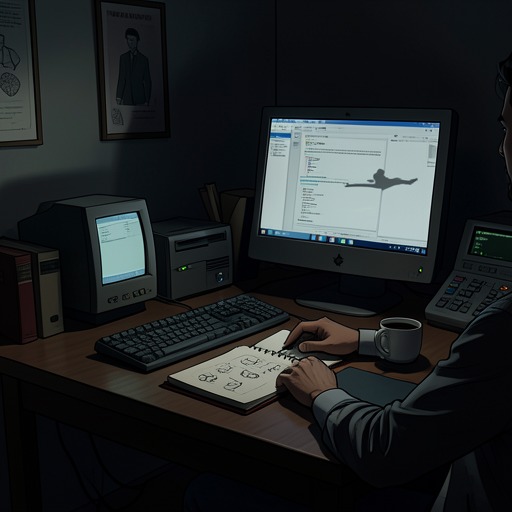
Gavira is not merely the executive implicated in the report; he is also the person who has secretly obtained a copy of it. His opponents on the board plan to use the investigation against his succession to Machuca, but they do not know that Gavira has paid a considerable sum to acquire the same document. He keeps it in a private, password-protected computer archive, alongside other secrets, with copies on floppy disks and CDs in a safe beneath the Klaus Paten painting. The placement links his confidential records of corporate weakness to the trophy celebrating the bank’s conquest of its rival.
He reads the report and recognizes that its account is substantially true. In his view, Puerto Targa and comparable ventures have been ways to gain time while he consolidates his position at Cartujano. He thinks of the bank’s recovery as climbing a ladder by moving the steps behind him forward: a precarious sequence in which each new transaction is needed before the previous one can support him. The church redevelopment is, in this calculation, bait for the Saudi purchasers and a necessary part of the hoped-for rescue. Gavira’s own drive for the presidency and the bank’s survival are bound together, but the report suggests that his chosen method may intensify rather than resolve the institution’s exposure.
An intruder’s bouncing-ball virus sharpens the sense that the bank’s secrets are vulnerable. The harmless program multiplies across Gavira’s screen and ends in a nuclear-style burst, then starts again. He initially worries that the hacker may have reached the confidential archive; the computer department is already checking for more destructive viruses. Unable to be certain that the private file is safe, Gavira deletes it. The action protects neither the underlying financial facts nor the larger scheme, but it shows how the bank’s crisis has become a struggle over control of information as well as capital.
Institutional significance
Cartujano’s rise combines aggressive acquisition with opaque financing. The absorption of Banco de Poniente makes the bank look dominant, while the investigation reveals that its own accounts depend on a sale that has not materialized and on transactions whose risks were hidden from the board. The Klaus Paten is therefore more than a decoration: as a conquered institution’s former emblem, it embodies the confidence with which Gavira displays victory even as he privately confronts evidence of weakness.
The church and bank plots meet in a pointed reversal. Cartujano presents the development as a lucrative opportunity, and the archbishop describes prospective compensation, a new church in a poor Seville neighborhood, and a foundation supporting social work in the Roma community. Yet the confidential report treats the same church deal as a possible source of reputational damage, while Gavira regards it as indispensable bait in a financial operation. Institutional language about benefits and redevelopment cannot settle who bears the risk: the bank’s shareholders, its traditional customers, the church community, or the city whose land is being recast as an asset. Through Cartujano, the novel makes corporate expansion look at once like triumph and exposure—a victory whose balance sheet, succession struggle, and public legitimacy remain precariously joined.